For JOHN CUNNISON disappointment with Labour budgets is ‘baked in’. He picks out his personal highs and lows from last week’s announcement.
For me, the radical government of 1945 sets a high bar to judge this Labour government by. Both administrations were elected at difficult times with similar, even if not identical, challenges. Now, as then, we are a country in massive debt that needs to be completely rebuilt.
 Unfortunately, the timid approach and narrowly factional nature of Keir Stammer’s regime is vastly different from the broad and radical programme of Clement Attlee’s cabinet.
The current government seems to have no sense of direction and no master plan, whereas the post-war government had a clear appetite for change, the desire to create a social democratic settlement that would serve the country well up to the 1970s.
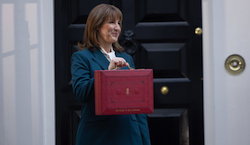
It is with these parameters in mind that I view Chancellor Rachel Reeves’ 2025 budget. Some of the announcements were undoubtedly welcome, although almost all came with caveats and drawbacks.
Take the two-child benefit cap. While the commitment to remove it is welcome, it came 12 months too late and seems to be a forced move rather than a genuine policy. If it had been announced in the first budget last year, the mood music would be different today.
Unfortunately, rather than scrapping her fiscal rules, maybe even announcing the end of neoliberalism, Reeves painted herself into a corner by adopting doctrines Labour had previously criticised.
Another welcome move was the tax on online gambling, although again the Chancellor could have gone further. Gambling addiction is a real problem and the proliferation of advertising and betting shops, especially in poor areas, is disturbing.
The measure could be reviewed and increased in future budgets, but Labour should also ban gambling advertising on all types of media, as we have done with tobacco and, to a degree, alcohol. This would begin to reverse some of the liberalisation that took place under the Blair government.
Landlords
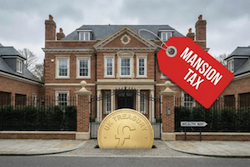
The ‘mansion tax’ is another move in the right direction, but it won’t solve local government finances, which are still hampered by the long aftermath of the poll tax. Crude council tax banding set in 1991 means households in the most deprived parts of Britain can effectively pay more that those in the richest. The tax on homes worth more than £2 million and £10 million goes a little way towards making those with high-value properties contribute more.
 Likewise, the tax on landlords’ income has been raised, but again this measure alone doesn’t do enough to tackle ‘landlordism’, while the hoped-for increase in landlords’ national insurance contributions never materialised.
The housing crisis remains a nettle yet to be properly grasped. Back in 1915, 90% of homes were privately rented, yet under post-1945 social democracy this was reduced to 8% as government took responsibility to provide good quality, affordable homes. Now, one in 21 people are landlords. I can see three empty family homes from my window, and there’s an airbnb property two doors down that could house some of the 3,000 people on our local council waiting list.
There were some tax cuts in the budget too, including abolition of the Energy Company Obligation scheme levy. This will reduce people’s bills by £59, but it means positive moves to fund insulation and other energy efficiency measures in buildings have been dropped.
The better option would have been to take energy generation and distribution back into public ownership. As with the water industry, privatisation has been an expensive failure and now suppliers have no imperative to cut heat loss and insulate homes as there is more profit in heating poorly built housing. The government seems to have surrendered this battle and, as usual, the public will pay the price of private greed.
On the other hand, changing the way we tax electric vehicles, so they are charged by mileage, is a good move. Hopefully, we will move towards a road use tax for all vehicles, rather than the blunt instrument of fuel levies. I’d like to see an increase in charges on heavier vehicles that cause more damage and congestion, and reduced fees for electric motorcycles and small cars.
Hopefully, the new tax will develop over time so that vehicles are charged more for use at peak hours and in congested areas. Extended to other conventional vehicles, such a measure could help tackle pollution, and even be used to reduce public transport fares or increase the frequency of buses and trains – a nudge, perhaps, towards a socialised mass transit network.
Wealth tax
Two key reforms were missing, however. The first was a real move towards a tax on wealth and rentier income. This is not just a matter of raising government income but of reining back the growing billionaire class who are seriously distorting our society by acquiring excessive amounts of assets.
 We have to start dismantling the central doctrine of neoliberalism, based on self-interest, deregulation and privatisation, and move back towards the solid bedrock of social democracy. The first step in doing this must be a major redistribution of wealth, and that starts by taxing assets that can’t be moved – land ownership, business ownership and financial assets.
Instead, the government has frozen tax thresholds, hitting earners at the lower levels of income. In my view, ideally, we should not tax anybody on minimum wage or below.
It’s not just socialists who would support this. A group of called Patriotic Millionaires UK has called for extreme wealth be taxed more, including a 2% wealth tax on fortunes over £10 million. In his book, The Trading Game: A Confession and YouTube channel, ‘Garys Economics’, the multi-millionaire economist Gary Stevenson suggests this is important, not just for moral reasons, but because of the damage such fortunes cause to society.
The second step towards re-establishing social democracy should be a believable growth plan for the UK that’s not based on ‘growing the pie’ through deregulation, PFI and privatisation of parts of the NHS. After all, these are among the reforms that got us into this mess in the first place.
Borrowing to invest in our dilapidated infrastructure would be a far better option, while re-joining the EU customs union and single market could give the economy a short-term boost. Recent analysis suggests Brexit is responsible for a black hole of £90 billion a year in the public finances. Ultimately, re-joining the EU would be more efficient, but would it satisfy the 52%/48% split from the dubious 2016 referendum?
This budget, it seems, was about steadying the economic ship, and the lack of reaction from the bond markets suggests it has done that. But the short-term thinking evoked by financial markets is no basis for making public policy.
A better measure would be whether it helps ordinary people feel hope. Are things getting better for them? Is public life and local democracy recovering? If Labour is not getting this right, who will voters turn to?
—-
John Cunnison is a member of the area activists’ committee of Unite the Union and currently vice president of North Staffordshire Trades Council.
See also: ‘Labour in Government: We Need Hope, Not Hardline Policies’ by Mary Stratford.
And: ‘Labour in Government: The Welfare Revolt’ by Ernie Jacques.