Arguing for welfare over warfare is naïve and out of date, says GARY KENT. We need urgently a European military superpower to protect us from whatever is coming our way, whether from east or west.
Twenty years ago, I was close enough to Venezuelan president Hugo Chavez to smell the sulphur. He was standing on a chair in the Churchill Room in the Commons surrounded by fawning left wingers, including Tony Benn, Ken Livingstone, and Jeremy Corbyn. The reality of Chavez, and his successor as Nicolás Maduro, was quite different to those expectations.
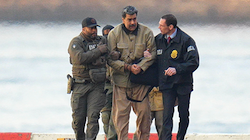 A third of Venezuelans now live in poverty in an oil rich country, a third have fled into exile and, after stealing elections, the corrupt regime sold itself to Russia, Hezbollah, Iran and Cuba.
With the honourable exception of John McDonnell, many of today’s hard left MPs have also failed to stand up for Ukraine. Indeed, some have argued that Nato is to blame for Putin’s invasion for accepting the membership of nations such as Estonia, ones that know well the brutality of the Soviet Union and Russia.
Such leftists usually avoid the issue of Iran where the latest brave uprising included a general strike and may yet topple the clerical regime. Inshallah. Awkwardly, for those who may have a sneaking regard for Iran’s anti-imperialist pretensions, Trump could provide a lifeline to the protesters who want the same things as we do: democracy, equality, peace and prosperity.
When he was Soviet foreign minister in the early stages of the revolution, Leon Trotsky said: “I will issue a few revolutionary proclamations to the peoples of the world, and then shut up shop.” Trotsky had some excuse for this – there was a revolution to pursue. Today’s pound shop Bolsheviks only want someone else to issue declarations.
To govern is to choose. Our government clearly disagrees with Trump’s foreign policy and his desire to control Greenland is a red line. But following the advice of some of its armchair critics to condemn Trump could endanger the assiduous diplomatic work of Keir Starmer and other European leaders to keep the US on board in saving Ukraine and defending Europe as long as possible. It’s an open question whether following the hard left’s advice would have scuppered US acquiescence for the planned Anglo/French security presence in Ukraine.
Power politics
The UK needs to find funds for extra defence spending but some on the hard left continue to argue for welfare over warfare, as if the two can be separated. Take anti-war leader, Lindsey German’s comment that Europe’s leaders are “compulsively addicted” to “the growing drive to militarism and rearmament across Europe”. This is deeply unserious stuff, as if Starmer, Emmanuel Macron and Friedrich Merz love nothing more than playing generals.
 What is clear is that the UK and Europe is facing increasing problems caused by the current “US regime”– a term I was surprised to hear recently from a senior Labour strategist that illustrates Trump’s descent into brazen and amoral power politics. As WB Yeats said of another historic world event: “All changed, changed utterly: A terrible beauty is born.”
The acronym ‘Taco’ can mean either ‘Trump always chickens out’ or ‘Trump always carries out his policies’, and it’s unclear at the moment which is more apt. Much of his team’s foreign policy is appalling but there are some actions we can welcome, not least the Anglo American capture of a tanker that was part of the Russian sanctions-busting network to smuggle oil vital to Russian revenues and its war against Ukraine.
The absolute priority for all progressives should be to end Putin’s aggression in Ukraine, a country he insists has no right to exist and whose subordination underpins his wider plans to dominate the old Soviet Empire. To paraphrase Trotsky again, you may not be interested in the war, but the war is interested in you. Standing up to Russia is not optional but central to social democracy as well the UK’s existence as a free nation with firm allies.
Russia shows no sign of stopping. Senior European security leaders are sounding the alarm and concluding that seemingly random acts of sabotage and disinformation are now a deliberate escalation of its campaign against Europe.
There has been a massive increase in hybrid operations and sabotage actions attributed to Russia and its agents. These include placing firebombs on commercial cargo planes that fortuitously damaged them on the ground, not over cities.
Russia has also increased surveillance and has been severing undersea cables that sustain the internet and financial transactions worth US$10 trillion each day. The overall repair cost is in the hundreds of millions already. Energy pipelines are vulnerable as are our public services and major companies.
Collective defence
Senior security figures used to reckon that Russia would expand its aggression to Nato territory by the end of the decade. But we may not have that much time as its overheated militarised economy may well need a new spark before any significant domestic backlash emerges, or even before Trump’s political position weakens with possible Republican losses at the US mid-term elections for Congress and Senate in November.
If Russia stops fighting in Ukraine, for whatever reason, it could decide to test the strength of Nato’s Article 5 commitment to collective defence by moving troops north, perhaps to occupy Narva, an Estonian town on the Russian border with a large Russian speaking population.
Europe must assume that the US will remain unreliable for years to come. Putin and Trump, in their different ways, have clearly marked our cards so our leaders need to become better international players, and quickly. The new world once rode to the rescue of the old world but now is the time for the old world to make itself anew.
In the UK, radical thinking about Europe usually focuses on rejoining the EU, the customs union or the single market but the EU is insufficiently nimble. We urgently need to build a modern European military superpower to protect us from whatever is coming our way, whether from east or west.
—-
Gary Kent is a foreign policy columnist for Progressive Britain and a Labour adviser in parliament.
He is also director of Labour Friends of Nato.
See also: ‘Peace & Conflict: Towards a New Left Perspective’ by MJ Denison.
And: ‘Estonia Calling’ by Gary Kent.


23 January 2026
As Ernie implies, there is no conflict between welfare, military spending and regional economic development. The armed services are struggling to recruit and retain personnel. There is a massive health crisis in the UK – related in part to inequality and stagnation. However, it’s not all about restoring the regiments. Drone use in Ukraine has changed the face of warfare, making troop movements lethal and returning us to the attritional warfare of the Somme.
Alternative forms of warfare also pose dangers. War is not all about the frontline. It’s also about disrupting infrastructure and services. Russia has the capacity to cause chaos to the UK’s internet and supply chains. With 26 million people dependent on prescription medicine, it would be relatively easy to create chaos and suffering.
Gary is absolutely right to highlight the danger that Russia poses, and the need for European co-operation. As Paul Mason argues, the best way of avoiding an attritional land war is through deterrence.
The ILP had a heroic first world war and played a vital role in opposing fascism and Stalinism in the Spanish Civil War. However, It did not cover itself in glory before world war two, mouthing the same tropes that worked well in 1916, but no longer applied in 1939. Its woolly, pacifist stance was a serious misjugdement and the reason why Orwell left the ILP. It may also have been a contributory factor in its decline. The ILP’s position attracted criticism from AJP Taylor, who came from an ILP background but whose understanding of history and international relations changed in light of the ILP’s failings, among other factors.
Paul Mason is currently writing a substack column called Conflict and Democracy which makes the socialist case for rearmament. It is worth reading.
17 January 2026
Gary’s support for more UK military spending and a European army able to combat adversaries is wrong on a range of counts.
Where does Gary think the armed services are going to get the volunteers? The army is in dire straits, grappling with declining recruitment and retention problems, and with outdated armaments and equipment. Even if you could conjure up the desired troops overnight, to train them and deploy them with the right military equipment and support systems will take years.