“The far right is more extreme, bigger and bolder than ever before.” That’s the stark warning from Hope not Hate’s annual State of Hate report, described as the the most comprehensive and analytical guide to the far right in Britain today.
“Reform UK’s rise, growing street protests, and increasingly hardline rhetoric are reshaping the political landscape, while public opinion is shifting and polarisation deepens,” concludes the report.
 “Taken together, this is the most significant far-right threat Britain has faced in decades, perhaps ever. The threat is at the ballot box, on the streets and in our communities.”
Summarising the “unglamorous” work of its research and monitoring teams over the last 12 months, the review casts light on the digital platforms where far right narratives are seeded, maps the networks that spread them, and sets out how online activity turns into street mobilisation and political pressure.
“We look at who is organising, who is funding, which groups are splintering, which ones are growing and where the next flashpoint might be,” says the organisation’s director of research, Joe Mulhall.
This was a year when “small protests outside so-called ‘migrant hotels’ escalated into a wave of anti-migrant mobilisation,” he says. “We tracked at least 251 protests across 77 locations. Flag campaigns spread. Vigilante patrols took hold. Activists travelled to French beaches to ‘stop the boats’ themselves.
“Stephen Lennon addressed a rally of more than 150,000 people and continued building a network of 1.9 million followers on X. Elon Musk appeared via video link and warned the crowd that violence was inevitable.
“Elsewhere, our polling shows how increasingly hardline rhetoric has reshaped the political landscape and begun to shift public opinion with it.”
Among Reform UK members, for example:
- 54% would prefer a ‘strong and decisive leader’ who can override parliament
- 66% believe a civil war will happen
- 61% have a positive view of Tommy Robinson
- more than half think non-white British citizens born abroad should be removed or encouraged to leave
- one in five think the same of non-white citizens whose parents were born here.
“Ideas about who belongs are hardening,” says Mulhall. “‘Remigration’ has entered mainstream debate. Ethnic definitions of national identity are gaining ground.
“Beyond electoral politics, organised fascist groups and decentralised extremist networks are preparing for violence. Nineteen individuals were brought to justice last year for far-right terror offences.”
Failing government
The comprehensive report of nearly 150 pages covers numerous areas of concern – from the rise of the radical right to race science and Tommy Robinson, as well as holocaust denial, anti-muslim bias and anti-LGBTQ+ activity.
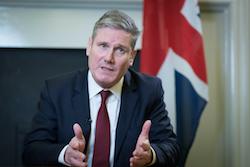 It also issues a harsh assessment of the Labour government, spelled out by chief executive Nick Lowles:
“Sadly, so far, the government has failed to adequately meet the challenge. At a time when political leadership was most needed, the government was – at best – largely silent, only adding to the sense of fear that many people felt.
“Worse still, in its attempts to appear tough on immigration, it echoed far-right narratives about feeling like a stranger in one’s own country, and made claims that mass immigration had done ‘incalculable damage’ to the British economy.”
While the coming year is going to be “equally challenging”, says Lowles, the report’s conclusions are not entirely negative. Although it could happen here, it’s not inevitable.
“While the outlook is certainly tough, and our work environment challenging, it should always be remembered that the majority of British people reject the politics of the far right,” he says.
“Most people still describe their communities as peaceful,” adds Mulhall. “Most reject racial definitions of belonging. When given a credible alternative, people choose hope over hate.”
That hope can be found in the activities and organisations of ordinary communities, says campaigns and communications director Georgie Laming, those who reject the politics of Reform and the divisiveness of the far right. The task now is to galvanise them and mobilise grassroots resistance.
“There is a job for us all at this moment, whether you are sitting and reading this report as a Hope not Hate supporter, a community leader, or even as a Cabinet minister,” she says.
Lamming points to the organisation’s current Vote HOPE 2026 campaign to stop Reform at this year’s local elections, as well as the work it is doing with communities, faith groups and charities to celebrate and inspire “a million acts of hope across Britain”.
“The groups and individuals covered in this report are extreme and are growing in confidence,” she says. “Often, the work of countering these people can feel overwhelming. That’s what they are relying on.
“They feed off our pessimism, they spread hate, and they tell a story that only radical, violent change will fix things.
“We can’t give up. Hope not hate was founded on the principle that hope itself is an action, not just a blind belief. Whatever part of the country you live in, whatever contribution big or small you can make, it’s time to stand up and be counted. Whilst it could happen here, it’s not inevitable.”
—-
State of Hate 2026: It Could Happen Here can be downloaded here.
You can support HOPE not Hate’s research here.
More about the Vote Hope 2026 campaign is here.
Sign up to the Reform Watch newsletter here.