A new book on Durham Coalfield communities is a timely testament to working class resilience, says MARY HULL, bringing together evocative tales of ‘marras’, meetings, strikes and marches as well as banners, brass bands and allotments. Full of hope and laughter, sadness and anger, it seeks to hand the area’s rich and radical history on to the next generation.
In July this year I was fortunate to attend the launch event for the book Mining the Memories: Stories of Durham Coalfield Communities at the magnificent and recently restored Redhills Miners’ Hall in Durham (the Pitmens’ Parliament). We were told what a mammoth task it had been to gather all the material for this book and shape it into the finished article, with much thanks given to Liz Harker, the chief editor.
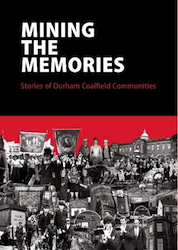 All that hard work by so many people has certainly paid off for this is an absolute triumph – so much more than a mere historical account of the Durham coalfield communities.
Countless people were interviewed as part of this Education 4 Action project and it is their voices, memories, reflections and poems that make the book sing. There is a loose theme that runs through their recollections, the notion that these were ‘the best of times, the worst of times’.
Reading the book certainly evokes a rollercoaster of emotions – memories full of hope, laughter and joy as well as sadness and anger. The very real hardships are not glamourised nor shirked but the camaraderie, sense of community, commitment to social justice and solidarity shines through.
Moreover, this book looks to the future – ‘the past we inherit, the future we build’ – and ends by highlighting all the current work being undertaken by E4A with young people in schools.
This history has never been more relevant. It is a testament to, and timely reminder of, what can be achieved by working people when they are backed by unions and associations, and are able to work together in communities. Improvements in housing, welfare, health and education are all covered with justified pride. We see events unfold through the eyes of children, women, miners and union officials.
At the centre of it all is the Durham Miners’ Gala – the county’s annual ‘Big Meeting’ looked forward to by all, remembered as a combination of joy and politics, a beacon of hope as well as a once-a-year well-deserved chance to party with your ‘marras’.
Co-op bags & candlelight
It is the people’s stories that make this book so special. Marie Toberty recalls being left to look after her baby twin siblings at the age of seven while her mother went out early to work as a cleaner during the second world war. Miner’s daughter Fiona Hill, now Durham University chancellor, remembers in her excellent introduction, doing her homework by candlelight during the 1978/79 strikes, and then going to university against the backdrop of the 1984 miners’ strike.
Paul Stratford recalls being told at school, despite passing his Northern Counties exam and wanting to go to college: “I think you’re punching above your weight there. It’s either the pit or a factory for you.” Elizabeth describes going to the Gala as a small child soon after the Easington pit disaster of 1951 and seeing her dad cry for the first time.
We hear about the miners’ love of allotments and flower shows, an antidote to being underground, of brass bands, banners and art, of the importance of the Co-operative Society (and of teenagers sneaking C&A purchases into Co-op bags to keep their parents happy).
It is hard to do justice to the breadth and richness of this book. It is a testament to the people involved that Mining the Memories concludes by looking forwards. The final words, fittingly, are left for young people, via a song written by Bill Elliott for the children he works with at Rickleton Primary School in Washington:
‘Now it is time to look to the future, what will old Redhills become?
Let’s never forget its history, an inspiration to the young.
Let them come together and be the best they can,
And make their very own history to keep our traditions living on.’
At the launch the children sang this song and it was joyous. This book is joyous too. It is also current and important. I can’t recommend it highly enough.
—-
Mining the Memories: Stories of Durham Coalfield Communities is edited by Liz Harker and published by Education 4 Action.
Yo buy it at the Durham Mining Museum or email Mary Stratford here.
You can find more about Education 4 Action on their Facebook page.
More about the restored Redhills Durham Miners’ Hall is here.