Keir Starmer’s premiership is unravelling, not because of a single scandal or a momentary lapse of judgement, argues ERNIE JACQUES. This is the consequence of ‘a political project built on deception and enforced through accusation, intimidation and bullying’.
The crisis of Labour in the wake of disastrous local elections and the Peter Mandelson scandal is not due to bad luck or external factors such as Donald Trump’s war on Iran, but symptomatic of far deeper and more corrosive problems within the Starmer project.
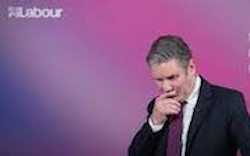 From the word go, this leadership has been built on deception, factionalism and the systematic undermining of Labour Party principles and values.
Starmer presents himself as a figure of competence and stability, but in reality he is a leader defined not by principle but by expediency. He is a political void, a frontman for a faction whose methods have been as ruthless as their ambitions. The qualities that now shock commentators – disloyalty, evasiveness, a willingness to sacrifice allies to save himself – were not hidden; they were foundational.
The controversy over Mandelson’s ambassadorship did not emerge from nowhere. Mandelson’s long-documented association with Jeffrey Epstein, his previous mischief making within Labour, and his self-serving cronyism was always going to raise questions. What shocked many was the revelation that his appointment was pushed forward without proper vetting, despite being announced well in advance.
Olly Robbins, the former Permanent Under Secretary at the Foreign Office, told the Foreign Affairs Select Committee that vetting was never made a condition of Mandelson’s appointment; that the Cabinet Office argued vetting was unnecessary; and that Number 10 applied sustained pressure to “just approve it”.
The alleged involvement of Morgan McSweeney – Starmer’s former chief of staff, supposedly a long-time ally of Mandelson, and architect of Starmer’s 2020 leadership campaign – only deepens the sense that this was not an administrative oversight but a factional operation. McSweeney denies this but the pattern is unmistakable.
For this is not a story about one appointment gone wrong. It is the logical outcome of a political machine that grew accustomed to acting with impunity.
Factional takeover
To understand the present crisis, one must return to the moment Starmer sought the Labour leadership. His campaign was built on a platform of continuity with the party’s then left-wing policy agenda – public ownership, workers’ rights, democratic reform. It was largely taken straight from the Jeremy Coybn playlist. But these election pledges were soon abandoned once he secured the job.
 According to investigative journalist Paul Holden in The Fraud, this was not a change of heart but a deliberate strategy. Holden alleges that £700,000 was made in undeclared donations to Labour Together (now called Think Labour), the organisation that helped engineer Starmer’s rise; that his leadership campaign was run on promises they never intended to keep; and that a coordinated effort was made to marginalise, discredit and ultimately purge Corbyn and many of his left supporters from the party.
Holden describes a “censorious, authoritarian” faction that used “dirty tricks”, “dodgy dossiers” and charges of anti-semitism to reshape the party. Whether one agrees with every detail or not, the broad trajectory is undeniable: a small, highly organised group seized control of Labour and remade it in its own image.
For thousands of Labour members, the transformation was not abstract. It was personal. People who had campaigned, organised and believed in Labour’s project of social justice watched as Corbyn was vilified, suspended and expelled; long-standing activists were excluded on contested and dishonest grounds; local democracy was overridden by leadership loyalists parachuted in to replace prospective parliamentary candidates; and the party’s culture shifted from participatory and broad church to top down and punitive as war was waged against the left.
Many members deserted the party in despair. Some joined emerging alternatives such as Your Party or the Greens. Even Reform. What united them was a sense of betrayal – not only by the leadership but by the local parties and colleagues who remained silent as the purge unfolded.
Centralised power
Much of the British political press also bears some responsibility for what happened. Many journalists viewed the war on the left as necessary, even virtuous. They applauded the expulsions, the centralisation of power, the narrowing of internal democracy.
In doing so, they ignored the warning signs: the evasiveness, the factionalism, the disregard for due process. Now confronted with the consequences, they feign surprise. The truth is that the Starmer leadership’s characteristics, currently on display, were always present; they were simply overlooked while they served a specific political purpose.
Edmund Burke is often cited as author of the famous quote: “The only thing necessary for the triumph of evil is for good men to do nothing.” In the case of Starmer’s Labour Party, the triumph of a ruthless group was made possible not only by its own actions but by the inaction of those who knew better – MPs who stayed silent, members who looked the other way, and party institutions that failed to uphold their own rules.
The result is a Labour Party stripped of its democratic character, its moral compass, and its connection to the movement that once sustained it.
So the Mandelson scandal and last week’s local election results are not an aberration. They are primarily the consequence of a political project built on deception and enforced through wild accusations, intimidation and bullying. A government born of such methods cannot endure.
Whether through scandal, internal fracture, or public disillusionment, the edifice of Starmerism is falling. When it collapses, the task will not simply be to replace a leader but to rebuild a party and a political culture that’s been corroded by years of misbehaviour and factional warfare.
The reckoning has only just begun and for the Labour Party it is existential. It would be a profound irony if a party founded by Keir Hardie to improve the lives of working people were to cease to exist under the leadership of another Keir who has failed to live up to his namesake’s long and enduring legacy.
—-
Ernie Jacques is a retired mechanical engineer, trade unionist and local government officer who lives in a York. He describes himself as “a long-term supporter of the ILP and a dedicated left-wing socialist”.
See also: ‘How Labour Together Divided the Party’ by Ernie Jacques.

5 June 2026
When Starmer goes I hope it will be the final end of New Labour. We have seen only too clearly where that road leads. Yes, he won an election with a massive majority. (And his strategists, in that respect, did a brilliant job.) But he has no clue what to do with it because he has no vision, no philosophy, no deep values, no guiding principles. Consequently he is blown about by every passing political breeze. His policies are whatever this week’s focus groups and opinion polls say is flavour of the month.
Rather than challenge conservatism and the ‘free’ market, he has utterly capitulated to it. He describes Labour as the party of home ownership, law and order and business – straight out of Thatcherism. His chancellor was so keen to show what big fiscal credibility she had that she went straight for the pensioners – a Labour government taking from the poor and vulnerable.
The leadership told the left it could leave and welcomed ex-Tories. We have seen where that led. It gained few Tory voters and lost Labour voters in droves, even to Reform. Starmer’s personal ratings are disastrous and he will leave behind a moribund Labour party, stripped of internal democracy.
Labour is just about salvageable. Whether any of the current contenders are up to the job is an open question. Labour needs a heavyweight – a Healey, a Crosland, a Bevan, a Benn. I see none.
14 May 2026
I totally agree with you, Ernie. It is difficult to know how to rebuild after all this. If something changes, however, I am sure many good people who left the party, either willingly or by expulsion, will want desperately to try.
To have been forced into this crisis by the factional antics of Labour Together is unforgiveable, especially at a time of such crisis for us all.