The Labour leader’s resignation is a chance for the party to revive its fortunes and rescue the country from the far right, says WILL BROWN. Does Andy Burnham have what it takes?
Keir Starmer’s resignation as prime minister on Monday gives this Labour government – and the party – a chance to repair its tattered reputation. The stakes could not be higher, for this may be the last opportunity to build a credible and popular alternative to a far right government.
 It has long been clear that Starmer was fighting a losing battle to convince his own MPs, the wider party and the electorate of his ability to defeat Reform. Yet there seemed to be no way forward. None of the available alternative leaders – whether Wes Streeting, Angela Raynor or Ed Miliband – convinced MPs that they had the leadership qualities, public appeal and political ideas to meet the challenge.
That changed with Andy Burnham’s audacious and successful bid to return to parliament via the Makerfield byelection last Thursday. It was a significant achievement to beat Reform UK so convincingly in an area where it had been hugely successful in council elections just last month.
Even six months ago, such a scenario seemed highly unlikely. But Starmer’s grip on power began to unravel in February with the removal of Morgan McSweeney as his right-hand man following the Peter Mandelson scandal, a shift that undermined the manipulative machine politics he had relied on to prevent Burnham’s bid to stand in Gorton and Denton earlier that month. With the disastrous local election results on 7 May, Starmer’s remaining authority drained away.
Even then, it was a huge gamble for Burnham to give up his beloved Manchester mayoralty and put his ambitions on the line in a seat that was one of Reform’s top 10 targets for the next election. That he triumphed with such a sweeping victory – winning more votes than the rest of the candidates put together – has convinced many of the remaining doubters in the parliamentary party that he is the leader they need.
It was a rare triumph for Labour against the far right, yet serious questions remain about what happens next.
First, should there be a leadership contest? Although this seems less likely since Streeting ruled himself out of contention, opinion remains divided. On the one hand, an orderly transfer of power to Burnham would be speedy, avoiding the damaging sight of leading Labour MPs taking pot shots at each other while giving Burnham some momentum going into office.
On the other, Burnham has been found wanting in leadership elections twice before and it may strengthen his case, and test his fitness to govern, for him to face a contest. An election would also give party members a chance to have an open debate on the way forward – something they have been denied for the past six years.
New direction?
Secondly, what is the best way forward? It has been painfully clear that the Labour right remains as ideologically bankrupt as it has been since Tony Blair’s departure from office in 2007, a fact reinforced by Blair’s own deluded intervention a few weeks ago.
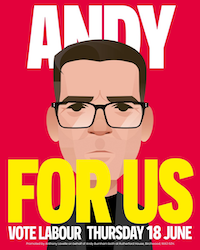 Although Rachel Reeves has, at times, tried to think about the bigger picture, her own tactical political nous – like Starmer’s – has often been found wanting. What’s more, her ideas were overshadowed by the Starmer-McSweeney leadership’s singular focus on exercising inner-party control and winning the 2024 general election, giving very little thought to what lay beyond.
So what would a change of direction under Burnham involve? There have been some indications of his thinking, not least in the promotion, by him and his allies, of ‘Manchesterism’, as well as in the work done by Mainstream, and his mayoral record in Manchester itself.
But he has also been something of a political changeling in the past, appearing to move left and right as the winds shift. His campaign in Makerfield was, perhaps understandably, conducted in broad brush terms and therefore light on detail. And there is a strong democratic argument that without a general election he will need to stick fairly close to Labour’s 2024 manifesto.
A leadership contest could force him to better define his vision, while an orderly transition might allow him precious time and energy to clarify his political ideas and policies.
Lastly, how swiftly will a new Labour administration – and a revived Labour Party – be able to act to confront the urgency of the current moment?
The risks of failure could not be greater, either for Labour or the country. The threat of a Reform government hovers over everything while the insidious politics of the far right are poisoning communities all over the country.
A Burnham-led government may give Labour the chance to drag our society, and our political culture, back from the brink and towards a more progressive and democratic future. The challenge for all of us is as great as ever; the road to renewal as steep as it has ever been.
—-
Will Brown is a UK academic working in politics and international relations.
See also: ‘Labour in Crisis: The Moral Reckoning of the Starmer Leadership’ by Ernie Jacques.
And ‘Labour, the Left & the Far Right’ by Will Brown.

23 June 2026
This has to be the final end of New Labour. We could not have had a better, clearer demonstration of where that road leads than this government.
Keir Starmer’s Labour Party spent so much of its time and energy focusing on winning elections and nothing else that when they actually came to government they hadn’t a clue what to do. Starmer has no guiding principles, no deep beliefs and his policies were whatever the focus groups and opinion polls told him was flavour of the month. When the polls changed so did the policies.
And for someone who was such a control freak about PR there have been some utter disasters. Who thought it was a good idea that the first act of a Labour government was to cut winter fuel payments to pensioners?
Andy Burnham stood for the leadership in 2015 and was not inordinately impressive. He and Yvette Cooper were basically advocating more of the same. That really won’t do now.
I want a party that is unashamed of what it is and what it stands for: public ownership; redistribution of wealth and power; the basic needs of life – housing, transport, health – provided publicly because the state is better at providing them than the market. And Labour needs to say so.
Tax is our subscription to a decent, civilised society, not something to be avoided wherever possible. Labour is the party of homes, not home ownership. Labour is the party of truth and justice, not ‘law and order’.
Labour should support “the light cavalry of competitive private industry” (Aneurin Bevan) against the blood-sucking vultures of international capital and private equity.
Labour’s policies need to be both socialist and electable, and not one to the exclusion of the other. Burnham gets a chance. But he’ll only get one. The stakes couldn’t be higher.