More than 90 per cent of Northern Ireland’s children still attend segregated schools. In a parting missive to his adopted home, CHRIS WILSON makes a plea for integrated education.
Later this year I will be returning to Great Britain from Northern Ireland where I have lived for 17 years, serving as church minister in a wonderful village community. I will miss Northern Ireland. It is a beautiful place with many kind, warm-hearted and generous people.
 It is also a society that has come a long way since the dark days of the Troubles, a place – on the whole – trying very hard to be much like any other part of the United Kingdom in the way it functions day-to-day.
Sadly, some aspects of Northern Irish society are still struggling to overcome the years of religious division that, all too often have led to fear, prejudice and outright hostility.
Politics, for example, is still too entrenched in tribal and community loyalties tied to either unionist or nationalist parties, although this is changing with a significant rise in support for the cross-community Alliance Party, as well as for the Greens and the far-left People before Profit.
On the other hand, the Labour Party in Northern Ireland (LPNI) is still unable to stand its own candidates in elections, although there are growing hopes that this may change if Andy Burnham becomes Labour leader and prime minister.
Outside politics, the cultural divide is most clearly felt in education. Nearly 30 years after the Good Friday Agreement, some 92% of Northern Ireland’s children are still educated in schools serving either the Protestant or the Catholic community, a form of segregation among young people that remains one of the chief causes of sectarianism.
For me, this segregated system is a major barrier to further political and social progress in breaking down communal barriers and mistrust. Simply put, educating children together from different background helps to undermine prejudice. It encourages young people to see each other as individuals in all their wonderful diversity, and not members of communities they don’t understand and regard as different.
Growing movement
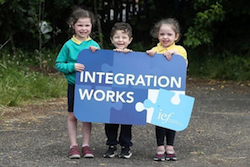
Thankfully, education is slowly beginning to change as more and more parents start to choose integrated schools. There are now 76 grant-aided integrated schools across Northern Ireland at nursery, primary and post-primary level, up from just one in 1981 with only 28 pupils. Integrated schools now educate more than 28,000 children from Catholic and Protestant backgrounds, plus those – in Northern Ireland’s increasingly diverse society – from other religious communities or none.
 Our youngest son attended the local integrated school in our area and, unlike many children who attended religious schools, his friends came from many different traditions and backgrounds. They not only learned and played together, they all ate the same vast quantities of pizza together when they visited the Manse. No-one cared where they lived, what their names were, or which church – if any – they attended.
That our son is part of a growing movement in Northern Ireland is largely down to two strong advocating bodies – the Northern Ireland Council for Integrated Education (NICIE) and the Integrated Education Fund (IEF) – who seek to promote integrated schools and support parents and teachers in setting them up or transforming existing schools to the integrated model.
They work to a specific and strongly worded ethos set out in the Integrated Education Act (NI) 2022 which states that an integrated school “intentionally supports, protects and advances an ethos of diversity, respect and understanding”.
“Integrated education, by definition,” says NICIE, “is the education together of children and young people from different cultural backgrounds and religious beliefs and of none, those who are experiencing socio-economic deprivation and those who are not, and those of different abilities.
“This ethos is deeply intentional in its practice and purpose,” it adds. “An integrated school should strive not only for diversity and balance across diverse groups; it should also ensure that it utilises this diversity as an opportunity for those within the school community to learn with, from and about one another. This includes intentionally engaging with reconciliation processes and challenging issues we have faced historically and continue to face at present.
“The integrated ethos should permeate everything within the school; it is its DNA.”
Vested interests
According to the IEF, more than two-thirds of people in Northern Ireland now believe integrated schools should be the main model for education. Yet, despite their increasing popularity with parents, integrated schools still face any number of bureaucratic and political hurdles, sometimes from those who seem to have a vested interested in maintaining division.
Indeed, as the IEF points out, “No government in Northern Ireland has ever sought to plan for the creation of integrated schools – their establishment has always been left to parents and schools alone. This is despite a statutory duty placed on the Department of Education to ‘encourage and facilitate’ integrated education, which is also included in the Good Friday/Belfast Agreement of 1998.”
 Just last year, for example, two very large schools in Bangor that applied to become integrated had their requests turned down by DUP education minister, Paul Givan, even though the Northern Ireland Assembly at Stormont determined in March 2022 that integrated education should be given more support.
Some parents object too, often because they fear their children will not have access to education about their religion . But that needn’t be the case. Indeed, the ability to value and respect faiths is best developed in a shared context.
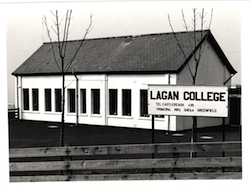
At Lagan College, for example, set up as Northern Ireland’s first integrated school in 1981 (see photo above), there are chaplains from both the Protestant and Catholic traditions who work together to support students and model the kind of collaborative approach that would benefit many other parts of Northern Irish society.
Children, families and communities should, of course, be free to believe what they believe, and to adhere to whatever faith they hold to be dear. But the more children can share their education with those from different backgrounds, the more a greater conviction will shine through the differences: that all human beings matter equally.
So this is my one wish for Northern Ireland as I leave this beautiful place: integrate the schools; bring children from different background together; let them learn together, play together, celebrate difference and value diversity together. Given the choice of educating for division or unity, we should choose unity every time.
—-
Chris Wilson is a Christian socialist, an active trade unionist and a member of the ILP.
See also: ‘Labour, Northern Ireland & the Right to Stand’ by Gerard Gallagher.
And: ‘Ireland, the ILP & the Slow Train to Peace’ by Gary Kent.