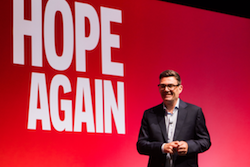
Bold, savvy and pragmatic, Andy Burnham’s first few weeks as prime minister have been impressive, says JOHN CUNNISON. But these are early days and numerous challenges remain from the Starmer era.
It is just a few weeks since the victorious Andy Burnham took a train from Manchester to London on 19 June, yet the political mood in the Labour Party – and more tentatively in the country as a whole – has shifted dramatically.
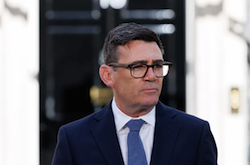 A Reform government no longer feels quite so inevitable and, for the first time in years, there is a sense of cautious optimism on the left. Burnham’s ascension to number 10 has been pivotal to the change, along with his decision to explicitly name the root cause of Britain’s struggles – neoliberalism.
In his first speech as prime minister, he declared: “In the 1980s, Britain took some wrong turns. Political power was centralised, economic power privatised. Large parts of the country were de-industrialised, and they still haven’t recovered.”
This direct challenge to the legacy of Thatcherism sets him apart from any of his predecessors – including Labour leaders and PMs – most starkly from those on the right and centre right who variously blamed the EU, immigration, regulation, benefit claimers, the ‘bloated’ public sector and a ‘woke liberal elite’ for the country’s woes.
Burnham, it appears, has a different diagnosis and a different plan. His vision is outlined in the book, Head North, which he authored with Liverpool’s Labour mayor, Steve Rotheram, plus the recent Mainstream Labour pamphlet, The Productive State: A Framework for Manchesterism.
While neither are a step-by-step policy manual, both publications reflect a depth of thought unseen among Labour leaders since Tony Blair’s ‘third way’. Indeed, Burnham’s approach is a deliberate rejection of the neoliberal framework that Blair set out to soften but rarely challenge.
The new leader’s Downing Street statement established positive ‘vibes’ from the start, but it was swiftly followed by some decisive and bold actions as he and his new ministers announced a raft of concrete, popular policies with clear and specific intentions – ending homelessness, cutting VAT on energy, reducing business rates by 20%, and capping bus fares at £2. He also scrapped the digital ID programme and re-affirmed support for Ukraine.
These moves, combined with his team’s savvy use of social media, have already started to eat into support for Labour’s two key opponents – Zac Polanski’s Green Party to the left, and Nigel Farage’s Reform to the right. This has been done without trying to “‘out-Reform Reform or out-Green the Greens’”, as Burnham put it, but by being “distinctly, authentically Labour”.
The party’s comfortable victory in the Manchester mayoral election was early validation of the new leadership and for many on the broad left it feels like, finally, ‘Labour is back’.
Broad church
Internally, the party already appears to be more harmonious. The new cabinet is a better reflection of Labour’s ‘broad church’ than it has been for some time, as Burnham’s team skillfully balanced factions without alienating any in particular – except perhaps the most hardline Starmerites, who rapidly resumed the Labour right’s habit of attacking their own party.
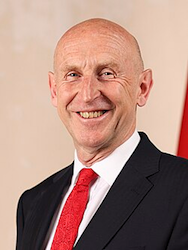 Burnham seems to have anticipated this – having witnessed their behaviour under Jeremy Corbyn – and drawn a line between the pragmatic and dogmatic Labour right. His choice of John Healey for Chancellor, for instance, feels like a minor masterstroke, signalling seriousness about defence while handing the funding challenge to someone with a track record of principle. Meanwhile, keeping Wes Streeting in the fold, often seen as a healthcare privatiser, by moving him to defence, neutralises his influence.
Ed Miliband’s exclusion from the chancellorship may seem like a nod to critics of his green policies, but Burnham’s appointment of Miatta Fahnbulleh – a Miliband ally – to energy suggests continuity. Miliband’s new role in foreign policy could allow him to advocate for radical change on a global scale while Burnham focuses on the domestic scene.
The cabinet’s composition – including figures such as Shabana Mahmood, Yvette Cooper and Pat McFadden – again shows Burnham’s caution about appearing to be too left wing. Mahmood remains Home Secretary (maybe under instruction to tone down her rhetoric on immigration) while McFadden’s role at the DWP points to a focus on the cost of welfare, again placating the right.
Louise Haigh, Burnham’s close ally on the soft left, leads devolution efforts, and Angela Rayner is back to take on housing, communities and local government. Burnham has also appointed a record number of Parliamentary Private Secretaries, including three from the Socialist Campaign Group – another first – to foster a more inclusive culture.
So far, so pretty good, then.
Yet many challenges loom. The government’s early spending pledges – on a National Care Service and defence (targeting 3.5% of GDP by 2035) – raise questions about funding. Wealth taxes and a 10% inheritance tax earmarked for social care are among the ideas being floated, while Healey has already set the mood music by warning cabinet colleagues that some cuts are unavoidable.
Of course, Burnham could always call out another elephant in the room that is hindering economic growth: Brexit.
Leaving the European Union is now widely recognised by most voters as a mistake, while many economists acknowledge that it’s responsible for a reduction in GDP of between 4% and 8%. Rejoining the single market and customs union could boost the economy. But would Burnham risk the political backlash, especially if it means joining Schengen or the Euro?
It’s certainly not likely during this parliament and he has said he will respect the constraints of Labour’s manifesto. But post-2029, if Labour retain power? When questioned, the new Minister for European Relations, Hamish Falconer, held the door open: “What we do in our next manifesto will be a question for the Labour Party,” he said.
Public ownership
Burnham’s critique of neoliberalism points the finger at privatisation as a key issue, particularly in the water and energy industries. The idea of public ownership in these sectors is popular but the financial and political hurdles can’t be ignored.
In the water industry, for example, options range from the government holding a golden share in water companies to full nationalisation of the industry, while the resistance from current owners is fierce and the minister, Angela Eagle’s opinion is still unknown.
In energy, the transition from fossil fuels to clean power is complicated by the market’s imposition of artificially high costs, such as charging renewable electricity at the same level as gas-produced electricity. Public ownership could change the situation and control prices, but it’s a long-term prospect despite Fahnbulleh’s progressive stance.
Housing is another priority, and another thorny knot to solve. Short term, it is possible to reduce homelessness by getting people off the streets and into hotels or hostels, as happened during Covid. But a long-term solution is a different matter.
Part of the problem is availability. Under Starmer, it often felt as if policy was driven by construction industry figures shouting about the “housing crisis”, while Labour leaders threw seemingly random numbers into the conversation, such as the need to build 1.5 million houses by the end of this parliament. This was then crudely turned into a set of targets by Steve Reid and imposed on local authorities with no consideration of what number nor what type of housing was actually required in each area.
By putting Raynor back in charge, Burnham has clearly signalled that a change in policy is coming, although exactly what change remains murky. A recent interview with the BBC didn’t clarify Raynor’s position, and for now she seems to be treading water while policy is developed to deliver the “biggest council house building programme since the post-war period”.
There are still a number of unkowns – will the aim be for council, not just social housing; will we see the return of Direct Labour Organisations, possibly via devolution; and what about rent control?
Bottom up
As for devolution and de-industrialisation, Burnham has signalled his intent by creating No 10 North and working directly with regional mayors. The aim to have “growth in every postcode” implicitly abandons the leveling up approach – where regions have to beg for grants from Westminster – replacing this centralised model with one seeking instead to ask what a place can produce, what infrastructure it lacks, and what skills are needed by its young people.
 It’s a very bottom-up approach. Jonathan Reynolds, another northern Co-operative MP, has been brought back as Business and Trade Secretary to drive a 10-year mission to make it happen across the nation, focussing on key sectors and working with businesses, local leaders and trade unions. Predictably Reynolds has been accused by the right-wing media of wanting Britain to return to the 1960s (ironically, a time of full employment and growth).
Finally, there’s the question of electoral reform. Burnham has called for a more co-operative political culture. But will he push for proportional representation? As one of the few European countries still using first past the post for general elections, this could be a defining test of his convictions.
In a Reddit ‘Ask Me Anything’ thread, he said: “I will seek to persuade my own party of the need for a commitment to it in the next manifesto.” With Plaid Cymru, the SNP, the Liberal Democrats and the Greens all likely to call for something similar, we could see the biggest change to our national political system in modern times within the next two parliaments.
Burnham’s positive start doesn’t hide the fact that the Labour government is still walking a political tightrope with hazards on every side. While there is much to feel good about, not all his policies will please those of us on Labour’s left.
His refusal to rule out further North Sea oil extraction has already drawn criticism, for example, as has his “pragmatic” stance on climate change. Similarly, his approach to Gaza – while acknowledging past mistakes – remains inconsistent with Britain’s unconditional support for Ukraine.
None of this is easy, of course. Acknowledging the genocide and de-proscribing Palestine Action, for instance, would alienate pro-Israel groups, even though it might resonate with the many on the left.
Miliband’s ethical foreign policy focus may help with Labour’s international stance. But with many Starmer allies still in the cabinet, change could be limited, and too little change in some areas might risk losing sections of Labour’s traditional base permanently to the Greens.
There are tough choices ahead and, with conflicting priorities and inevitable compromises, at some point the ‘Burnham bounce’ will descend to Earth. But for now, for the first time in a long time, there’s a new ingredient in the Labour mix: hope.
—-
John Cunnison is chair of the area activists’ committee of Unite the Union and a member of Unite’s national Labour Party Liaison Committee.
See also: ‘After Starmer: What Next?’ by Will Brown.
And: ‘Labour, Mainstream & the Renewal of Hope: An ILP Statement’.