Andy Burnham’s big task of bringing down the benefits bill is about more than money, says MARY HULL. It’s about the kind of society we want to be.
Much has been written recently about the spiralling costs of the UK’s welfare bill, now said to be £333 billion a year. It’s seen as another symptom of “broken Britain” and social media is alive with outrage. Young people and people with disabilities attract particular venom, described as “workshy” and “playing the system”.
 None of this is new, of course. In fact, it’s depressingly familiar. Former Tory chancellor George Osborne famously talked up “strivers not scroungers” back in 2010 when introducing the first wave of a series of welfare cuts, while notions of “something for nothing” claimants, “benefits Britain” and the “undeserving poor” have been with us for years, if not decades.
Now, as ever, right wing media and politicians are calling for cuts, pointing the finger at the rising number of individual claimants, while mainstream pundits fret about a system that seems impossible to reform without causing genuine human harm on the one hand or carrying huge political risk for the government on the other.
Finding a solution that is politically feasible, economically savvy and humane is far from simple. The costs of welfare are, indeed, eye watering. But it is the human cost that is most troubling. Cuts alone will only exacerbate the issue, as they have before, further damaging an already deeply flawed system while plunging people into poverty and putting pressure on frontline services.
From my long experience of working with people in difficult circumstances, it’s clear the vast majority of benefit claimants want employment and a sense of purpose, the chance to earn money and develop skills. The current bureaucratic and inflexible process makes that difficult at best and all but impossible for some.
The problem was captured neatly in an excellent recent article by Compass director Neal Lawson, who looked at benefit reform more broadly, outlining some of the deeper causes of the ever increasing costs, while noting the dangers of personalising what is a state-created issue and of thinking it will all be solved by slashing spending.
He points to our society with its “jobs that don’t pay enough, homes that cost too much, too little in the way of care, a lack of training and education and health support that people need”.
“We live in a sick society,” he says, “and we’ve transferred the burden of that sickness from society to the individual. The social contract is broken: nothing is secure.”
Addressing the well-documented rise in mental ill health, he adds: “Our economy and our culture are driving people mad. And yet we don’t own this as a nation, a society or a democracy – we pass the buck to the individual and impossibly demand that they shape up, they take the pills, they get the counselling and they individually try to find their feet in a world that offers no collective foundations.”
Lawson stresses the need for a cross-party approach, for government departments to work together, and for policy makers to listen to those at the sharp end, to face up to the very real practical problems claimants endure, while not expecting any of it to be solved quickly.
Welcome change
Thankfully, Andy Burnham does seem to have a different attitude to some of his predecessors. His pledge to hold a full review that focuses on supporting people in need and takes note of the wider context is very welcome.
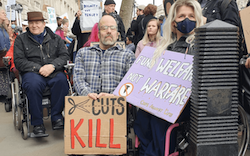 That context is particularly important for disabled people. In 2020 I wrote an article describing my friends’ appalling and humiliating experience of going through assessments for PIP (Personal Independence Payments) and ESA (Employment and Support Allowance). Their stories made it clear how hard it is to take jobs when riddled by the fear of losing out on benefits if or when the paid employment doesn’t work out. All too often people just stop trying.
The interim report from the current Timms Review sounds promising on this issue, recognising the system is “dehumanising” for disabled people and “not fit for purpose”.
Based on listening to people with experience, the report could herald a new approach. It talks of plans to fast track those with reliable evidence of serious conditions, including people in end of life care, and suggests that a reformed system should assess what people can do rather than focusing on what they struggle with, an often humiliating process.
The devil will be in the detail, of course, but the tone of the interim report is realistic and potentially empowering. In the foreword it states: “Disabled people contribute a wide range of skills and strengths to our economy and society, including problem-solving, adaptability, creativity and a depth of insight shaped by lived experience. These capabilities enrich workplaces and strengthen communities. Ensuring disabled people can participate fully is, therefore, not only a matter of fairness, but fundamental to delivering better outcomes for the nation.”
Reform of the welfare system will not only affect disabled people, of course. Both my children, like many other young people, have had several jobs at once and their incomes have fluctuated. At times this means they would have met the criteria for receiving benefits.
Yet neither of them could face the hassle of making a claim, regarding the time it would take to explain their change of circumstances and the delay before they’d receive any money as too frustrating to be worth the bother. Again, this is not an individual issue, but a systemic one.
Research in 2025 suggested that seven million households miss out on financial help and support, amounting to £24bn of unclaimed benefits and social tariffs. Much of this is down to the sheer complexity and inflexibility of the system.
One young woman I mentioned in my 2020 article is now a single parent living in social housing and receiving a range of benefits. She is desperate to work and knows it would be good for her mental health. But the obstacles are just too many, chief among them that fear of trying to work only for the job to end, meaning she would then have to start again with a complex benefit claim.
Recently, thanks to a friend, she took a cash-in-hand job doing some gardening, earning £30 a day to work from 9am to 1pm. She knows it is exploitation and is angry at the injustice, so she decided to pack it in, even though she enjoyed it and misses it. It’s a crazy, yet all too common situation.
Policy disconnect
The plight of unpaid carers is yet another example of how the system works against those it’s meant to help. Some carers’ allowance claimants were wrongfully overpaid by the Department of Work and Pensions, which then asked them to pay the money, back. Unknowingly, some had accrued debts of up to £20,000.
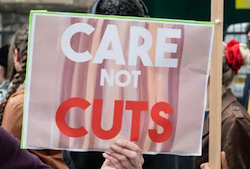 By the nature of what they do, unpaid carers often can only work part-time jobs with irregular hours. But the DWP, unlawfully, told them they were not allowed to average their incomes over a year, unfairly penalising them for breaching earning limits.
This demonstrates a complete disconnect between policy and the reality of peoples’ lives. It is currently being reviewed, but at a painfully slow pace.
With so much going wrong, the need for the Labour government to get welfare reform right is stark, not least because the right wing alternatives are horrifying. Reform UK has recently waded in to the debate with a policy paper described by the Independent as racist nonsense.
“Under Reform, only British citizens will be entitled to almost all benefits,” it states. “In particular, we will restrict access to universal credit, housing benefit, most other non-contributory benefits, and taxpayer-funded free childcare to British-citizen adults. These rules will apply to both new and existing claimants.”
As the Independent comments: “There is an insidious assumption here that all ‘foreign nationals’ are spongers, and that only the British are hard-working and deserving. This is nonsense. The social security system isn’t a national charity for the deserving poor, but something that holds society together.”
This is the nub of this issue for me. Benefit reform is not just about money; it’s about people and the sort of society we want to be.
At the end of his trenchant piece, Neal Lawson concludes: “When Burnham talks about place before party, the local over the centre, the long term over the short term – he is already describing the right approach to reducing the welfare bill. The Swedes use a slogan that isn’t about help but about hope. It is dynamic because it’s optimistic. They say ‘secure people dare’. It is time for our government to dare.”
The task of reforming benefits is vast, long term, complex, but also essential. It goes to the heart of what we want to be as a country. The right wing will be sure to howl their pseudo-outrage and whip up division and resentment while the monetary pressures are very real.
Yet I feel a cautious optimism, a tangible hope that with Andy Burnham’s government we are, at last, on the right path.
—-
Mary Hull is a former probation officer and community development worker.
See also: ‘A System Designed to Punish’ by Mary Hull.
And: ‘Disability Rights, Society Wrongs’ by Sandra Wilson.


23 September 2026
Thank you Mary for clearly outlining the current issues with our welfare bureaucracy. The cost of what is labelled as welfare has increased. It now includes the old age pension while the tax credit system is also now under welfare. I wonder how much we are subsidising large firms that are not paying their workers enough to live on.
There is also the issue you describe of how difficult it is for people with disabilities to get into work and keep a job. Employers are reluctant to make proper adjustments and to accept that some people have difficulties in managing their health needs because of their disabilities, that they need a bit more understanding and time to help them with their job.
It is easy for the political right wing to say it is an individual’s fault that they are not working or earning enough to live on. I hope Andy Burnham and the Labour government know better than our welfare state detractors, and make proper supportive policies that help those who can work and support those who cannot.