Anthony Crosland’s The Future of Socialism was published 70 years ago and its influence on the Labour Party has lasted for decades. So does it have anything to tell us today? ARUN LEWIS has his doubts.
If you had asked a Labour member in the 1950s or ’60s which book had most influenced their thinking, many would have picked Anthony Crosland’s The Future of Socialism.
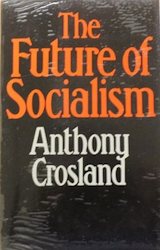 Released as a riposte to Aneurin Bevan’s In Place of Fear, Crosland’s work was published in 1956, the year after Hugh Gaitskell succeeded the aged Clement Attlee as Labour leader following the party’s second successive election defeat.
Labour’s crisis arose from its failure to build on the great successes of the 1945 government when it had founded the NHS, established the welfare state and instituted a huge council house building programme.
The intellectual foundations of those achievements had been laid in the late 1930s, when Attlee led Labour’s recovery from the disastrous national government of 1931 with a series of policy programmes, including the Immediate Programme of 1937, the Home Policy of 1940, the Old World and the New Society of 1942, and Full Employment and Financial Policy in 1944.
The party also committed itself to tackling William Beveridge’s “five evils” of want, disease, ignorance, squalor and idleness.
By 1945, when Labour published its famous manifesto, Let Us Face the Future, it had a detailed prospectus for nationalising industry and infrastructure, building council houses, establishing a health service and constructing a rational, planned yet still capitalist economy.
By 1949, however, the Attlee government had run out of steam as the pressures of international affairs and pressure on the pound left the party with few new ideas. Not surprisingly, when Labour faced the public in 1950 and 1951, its majority was, first, whittled down, and then lost altogether.
Labour soon became mired in splits between its Bevanite and Gaitskellite factions, a disruption born out of the 1950 budget demand for higher defence spending at the cost of free eyeglasses and dentures.
Bevan published his highly readable, but not entirely academic, In Place of Fear, in 1952, which said little about where the party could go next, focusing instead on moral missions to end unemployment, introduce a socialist parliamentary democracy, and further nationalise industries.
Labour’s right, led by Gaitskell, rejected this vision and set about establishing an alternative. At the heart of these efforts was a group historian Ben Pimlott called the ‘Frognalite set’, named after the Hampstead road where Gaitskell lived. His apartment became the meeting place for an array of close allies, including Crosland, Douglas Jay, Roy Jenkins, Bill Rodgers and Patrick Gordon-Walker.
Reframed goals
Their reply to Bevan – Crosland’s The Future of Socialism – was published after Gaitskell became leader and held great sway over the right wing of the Labour movement for the next 40 years.
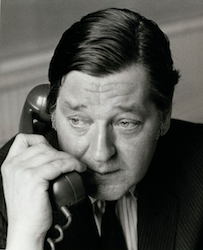 Crosland’s fundamental argument is that the policies of the pre-war Labour movement were now out of date as post-war capitalism had changed, becoming more consultative and consensual, based on a widened capital base that stretched beyond private industry to institutions such as the joint-stock company. The working class, he argued, were no longer bound by strict party loyalties.
Crosland (pictured left) reframed the goals of British socialism as not to overturn capitalism nor control the “commanding heights of the economy”, as Bevan put it, but to reduce and eliminate inequality through better services, funded by redistributionist taxation based on a continually growing capitalist mixed economy.
Crosland’s book is the essential revisionist work, the product of that post-Attlee interregnum when the Labour right looked for a new gospel. It retained great significance until 1997 when its focus on taxation as a tool of redistribution forced Tony Blair’s modernisers – with their fear of upsetting middle England – to turn their backs on it.
But it never entirely lost its purchase on Labour thinking. Arguably, Blair’s decision to re-write Clause Four was the culmination of a central revisionist aim. And Gordon Brown certainly rated the book highly, even writing an introduction to the 50th anniversary edition in 2006.
Undoubtedly, it also influenced later groups such as Labour First and Blue Labour, especially during the party’s soul searching period following Brown’s defeat in 2010. And in 2015 former MP Peter Hain wrote a book called Back to The Future of Socialism, which took inspiration from Crosland to argue for a return to core Labour values of decency, social justice, equality and prosperity for all.
But is Crosland still relevant to us today as we live through another shift in Labour direction amidst huge political and economic turbulence on a national and global scale?
At one level, it’s clear that many of Crosland’s assumptions are out of date. Indeed, he posited that Britain in the 1950s was entering a period of “mass abundance” that stood in contrast to the depths of poverty experienced by Bevan and millions of other working class people in the first half of the 20th century.
According to Crosland, there was now sufficient wealth in the economy for all, so the post-war austerity, anti-consumerist message of tightening belts in the national interest held little purchase, especially among increasingly prosperous upper-working and middle class people, particularly the growing professional and public sector workers who would become the core of future Labour-voting coalitions.
Different world
The world that’s facing Andy Burnham’s government is very different. After 40 years of neoliberal economics, of deindustrialisation, deregulation, financial collapse, austerity and Brexit, Crosland’s prediction of ever-growing abundance and consensual politics seems naive, to say the least.
 We live in a world where huge amounts of wealth are concentrated in the hands of increasingly few billionaires and millionaires. And while capitalism has undoubtedly produced a proliferation of purchasable goods, this has not been accompanied by a redistribution of wealth.
Indeed, the tax system, that crucial element of the state apparatus vital to Crosland’s plans for equality, has been so consistently undermined that in some respects it actually facilitates the consolidation of wealth in the hands of a few, rather than creating a broad “share-owning, property-owning, capital-owning” democracy for the many.
Crosland’s rejection of the state as a force with a substantial role to play, not just in regulating the economy, but in driving and directing it towards goals and strategies for the common good, has, for a long time, left a gaping hole at the centre of Labour’s economic message.
It is all well and good to aspire for high quality and equitable provision of comprehensive education, NHS healthcare and council housing, but by rejecting the state’s role in the economy, successive administrations have left such services at the mercy of the market and of the next Conservative government, ever eager to cut them.
The economy, as the 2008 financial crash demonstrated, is not simply a field of bountiful produce that the government can trim and collect whenever it wants to distribute a tax credit to a favoured group or service. It is the building block upon which society, and politics, is built, and cannot be left entirely outside public control.
This does not mean we should return to the Morrisonian vision of centrally run nationalised companies managed by professional boards. Instead, we ought to take a lesson from post-war Germany, when companies were obliged to include worker representatives on their governing boards, while nationalised services and enterprises remained accountable to local and, where necessary, national government.
Producing airless, unapproachable bureaucracies is not the goal of the socialist project. Indeed, Crosland was right to criticise this tendency in Labour’s post-1945 project. And he deserves some praise for pushing the Labour Party to redefine itself in the aftermath of 1951.
But we ought to disregard, once and for all, many of the failed arguments cherished by the Labour right for so long and instead develop a new, vibrant debate about the party’s social, economic and political goals as it enters another new era.
—-
Arun Lewis is a history and politics student at the University of Oxford who is writing a thesis on the changing politics of trade unions in the Welsh valleys in the 1910s.
You can read more of his published work here.
See also: ‘The Strange Death of Welsh Radicalism’ by Arun Lewis.